



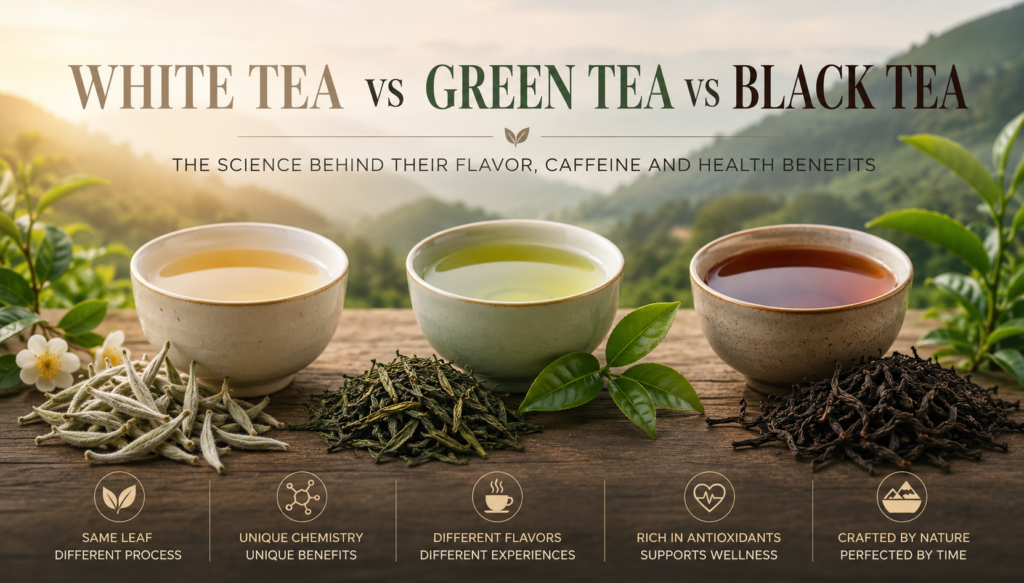
Walk through a tea plantation in the early morning, and you’ll notice something surprising. Every bush looks almost identical. Yet from those same glossy green leaves come delicate white tea, refreshing green tea, and bold black tea.
How is that possible?
Many people assume these teas come from different plants. They don’t. White, green, and black tea all come from Camellia sinensis. The remarkable difference lies in what happens after the leaves are picked. A matter of hours, combined with centuries of craftsmanship, can completely change the flavor, aroma, color, and chemistry of the finished tea.
For tea lovers and luxury travelers alike, understanding those differences makes every cup more meaningful. Whether you’re sipping freshly brewed tea overlooking the misty hills of Munnar or enjoying an afternoon tea at home, you’ll appreciate why each variety has earned its place.
One Plant, Endless Possibilities
Tea production is often compared to winemaking, and for good reason.
Just as grapes from the same vineyard can become sparkling wine, rosé, or a full-bodied red, tea leaves from the same plant can become entirely different beverages. The deciding factor is processing.
Once harvested, tea makers carefully control four key steps:
- Withering
- Rolling
- Oxidation
- Drying
The amount of oxidation determines whether the leaves become white, green, oolong, or black tea.
Oxidation is a natural chemical reaction that begins when the cell walls of freshly picked leaves break and enzymes interact with oxygen. During this process, naturally occurring compounds called polyphenols gradually transform into new compounds that change the tea’s color, aroma, and flavor.
This single process explains why one leaf can produce such different results.
White Tea: The Closest Thing to Fresh Tea Leaves
White tea undergoes the least processing of all traditional teas.
Young buds and the newest leaves are harvested, usually during early spring. Instead of being rolled or heavily handled, they’re simply left to wither before being gently dried.
Because the leaves experience very little oxidation, much of their natural chemistry remains intact.
The result is a tea that’s elegant rather than dramatic.
Expect subtle floral aromas, soft sweetness, hints of melon or honey, and an almost silky texture. Good white tea doesn’t overwhelm your palate. Instead, it slowly reveals its character with every sip.
One reason white tea is prized is its high concentration of catechins, a group of antioxidant polyphenols. Since the leaves undergo minimal processing, many of these naturally occurring compounds remain relatively unchanged.
That doesn’t automatically make white tea healthier than every other tea. It simply means its antioxidant profile differs.
Does White Tea Always Have the Least Caffeine?
Not necessarily.
This is one of the biggest misconceptions about tea.
Many white teas are made primarily from unopened buds. Those buds naturally contain more caffeine than mature leaves because the young shoots use caffeine as a natural defense against insects.
A lightly brewed cup of white tea may contain less caffeine than black tea. However, a high-quality silver needle white tea brewed for several minutes can contain surprisingly similar amounts.
Leaf grade, brewing temperature, and steeping time often matter more than the tea’s color.
Green Tea: Freshness Preserved
Green tea follows a very different path.
Soon after harvesting, the leaves are heated to stop oxidation almost immediately. This preserves their green color and prevents the natural enzymes from continuing their chemical reactions.
Different regions use different methods.
Japanese producers often steam the leaves, creating bright vegetal flavors with notes of seaweed and sweet corn.
Chinese producers typically pan-fire the leaves, producing nuttier aromas with hints of roasted chestnut and toasted grains.
Both methods preserve the leaf’s natural chlorophyll while maintaining high levels of catechins, particularly epigallocatechin gallate, better known as EGCG.
EGCG has been studied extensively for its antioxidant properties, although researchers continue to explore exactly how it contributes to human health. Like many foods rich in plant compounds, green tea appears to support overall wellness when enjoyed as part of a balanced lifestyle.
The flavor profile is equally distinctive.
Good green tea tastes clean, lively, and refreshing. Depending on its origin, you might notice grassy notes, fresh herbs, steamed vegetables, citrus, or delicate sweetness.
Black Tea: Controlled Oxidation Creates Complexity
Black tea often surprises people because it’s actually the most processed of the three.
After withering, the leaves are rolled to break their cell walls. Oxygen then interacts freely with the exposed enzymes, allowing oxidation to continue almost completely.
As oxidation progresses, catechins transform into larger compounds called theaflavins and thearubigins.
These compounds are responsible for many characteristics associated with black tea:
- Its deep amber color
- Rich body
- Malty sweetness
- Dried fruit notes
- Pleasant bitterness
- Longer finish
In other words, black tea doesn’t lose its beneficial compounds. Instead, those compounds evolve into different forms.
This explains why black tea develops flavors that white and green tea simply cannot achieve.
Premium black teas from regions like Assam offer bold maltiness, while Darjeeling’s famous first flush teas can display surprisingly floral characteristics despite being classified as black tea.
Does Growing Location Matter?
Absolutely.
Tea reflects its environment much like fine wine.
Altitude, rainfall, soil composition, temperature, and even morning mist influence how tea develops.
High-altitude tea gardens generally produce slower-growing leaves. That slower growth allows the plant to accumulate more aromatic compounds, resulting in greater complexity.
This is one reason mountain-grown teas are so highly valued.
Munnar provides an excellent example.
Nestled within the Western Ghats, Munnar’s cool climate, rolling hills, frequent mist, and mineral-rich soil create excellent growing conditions for premium tea. The region produces teas known for their bright aroma, balanced body, and clean finish.
Tea grown at lower elevations often develops stronger body but slightly less aromatic complexity.
Neither style is better. They’re simply different expressions of the same plant.
Comparing White, Green, and Black Tea
| Feature | White Tea | Green Tea | Black Tea |
|---|---|---|---|
| Processing | Minimal | Heated immediately after harvest | Fully oxidized |
| Oxidation | Very low | Almost none | Nearly complete |
| Flavor | Floral, delicate, sweet | Fresh, grassy, vegetal | Rich, malty, bold |
| Body | Light | Medium | Full |
| Caffeine | Low to moderate* | Moderate | Moderate to high |
| Main Polyphenols | Catechins | Catechins (especially EGCG) | Theaflavins and thearubigins |
| Best Brewing Temperature | 70 to 80°C | 75 to 85°C | 90 to 100°C |
*Actual caffeine varies depending on leaf grade, harvest season, and brewing method.
Which Tea Offers the Most Health Benefits?
People often search for a single winner.
The truth is more interesting.
Each tea offers a slightly different nutritional profile because each undergoes a different level of oxidation.
White tea retains many naturally occurring catechins.
Green tea contains abundant EGCG, one of the most researched tea antioxidants.
Black tea develops theaflavins and thearubigins, compounds associated with antioxidant activity and cardiovascular health.
Current research suggests that drinking tea regularly, regardless of the variety, may support heart health, cognitive function, and metabolic health. However, tea works best as part of an overall healthy lifestyle rather than as a standalone solution.
No single cup replaces good nutrition, exercise, or quality sleep.
Choosing the Right Tea for the Right Moment
Perhaps the better question isn’t, “Which tea is best?”
It’s, “Which experience are you looking for today?”
A slow morning overlooking mist-covered mountains almost invites a rich cup of black tea.
A peaceful afternoon after a spa treatment pairs beautifully with white tea.
After walking through tea plantations or exploring forest trails, green tea feels especially refreshing.
Luxury travel often teaches us to slow down and notice small details. Tea asks us to do exactly the same.
Temperature, aroma, texture, even the sound of pouring hot water into fine porcelain all become part of the experience.
That’s why visiting tea-growing regions leaves such a lasting impression. Seeing the leaves being harvested, processed, and brewed only a few hours later creates a connection that’s difficult to recreate anywhere else.
Final Thoughts
White tea, green tea, and black tea begin life as the same leaf, but careful craftsmanship transforms them into three completely different experiences.
White tea celebrates purity and subtle elegance.
Green tea captures freshness and vibrant character.
Black tea offers richness, warmth, and remarkable complexity.
None is objectively superior. Each tells a different story through aroma, flavor, and chemistry.
The next time you lift a warm cup of tea, take a moment before the first sip. Notice its color. Inhale the aroma. Think about the journey that tiny leaf has taken from mountain plantation to teacup.
Sometimes, the smallest rituals become the most memorable ones. And like any memorable journey, the pleasure isn’t only in reaching the destination. It’s in appreciating every step along the way.