



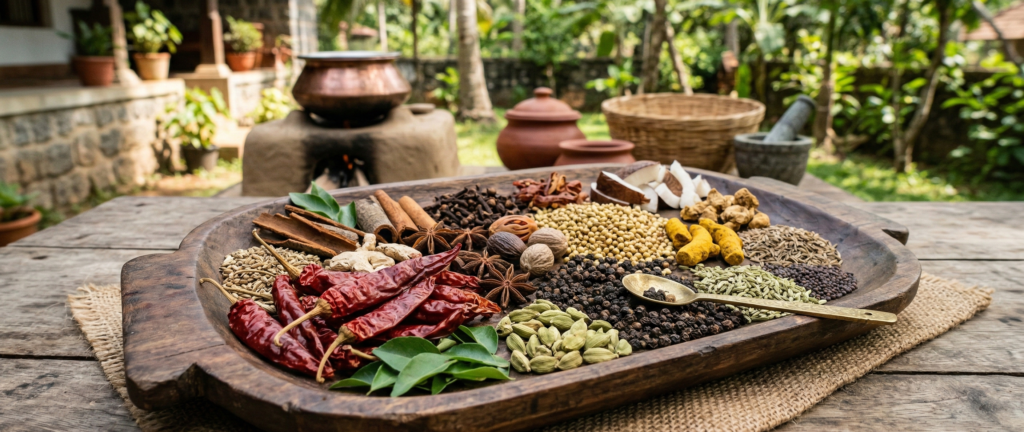
Why Kerala Became the Spice Coast
Kerala’s position along the southwestern coast of India placed it directly on ancient maritime trade routes. The Western Ghats provide high rainfall, humid air, and fertile laterite soil. That combination creates ideal growing conditions for pepper vines, cardamom plants, cinnamon trees, and more.
As early as the first millennium BCE, black pepper from this region was traded with the Roman Empire. Later, Arab traders dominated the spice trade. By the late 15th century, European powers arrived seeking direct access to spices, especially pepper. Control over spice-producing regions influenced colonial expansion for centuries.
Spices were never just agricultural products here. They were economic drivers.
Now let’s examine the key spices in detail.
Black Pepper: Piper nigrum
What It Is
Black pepper comes from the dried unripe berries of the vine Piper nigrum. The vine climbs support trees and thrives in humid, shaded conditions. Kerala remains one of India’s major pepper-producing regions.
Peppercorns are harvested while still green, then sun-dried until they shrink and turn black. The wrinkled outer layer holds essential oils responsible for its sharp aroma.
Health Benefits
The primary active compound in black pepper is piperine. Research shows that piperine:
- Enhances absorption of nutrients, especially curcumin from turmeric
- Stimulates digestive enzymes
- Has mild anti-inflammatory and antioxidant properties
Pepper also promotes saliva and gastric juice secretion, which supports digestion.
Historical Note
Pepper was once so valuable it was referred to as “black gold.” Roman records show large imports of pepper from the Malabar Coast. In medieval Europe, pepper was used both as a preservative and a status symbol. Control of the pepper trade was one of the major motivations behind European exploration of sea routes to India.
Cardamom: Elettaria cardamomum
What It Is
Often called the “Queen of Spices,” green cardamom grows in shaded forest environments at higher elevations. Kerala’s Idukki district is one of India’s primary cardamom-growing areas.
The plant produces small green pods containing aromatic seeds. The pods are hand-harvested before full ripening and then carefully dried to preserve color and essential oils.
Health Benefits
Cardamom contains volatile oils such as cineole and terpinyl acetate. Studies suggest that cardamom may:
- Support digestive function
- Help reduce mild bloating
- Provide antioxidant activity
- Assist in maintaining healthy blood pressure levels in some individuals
It is also traditionally used to relieve cough and improve oral freshness.
Historical Note
Cardamom has been cultivated in southern India for over a thousand years. It was traded by Arab merchants and later became highly valued in European markets. Unlike pepper, which dominated bulk trade, cardamom was prized for its fragrance and culinary versatility.
Cinnamon: Cinnamomum verum
What It Is
True cinnamon, also called Ceylon cinnamon, comes from the inner bark of Cinnamomum verum trees. While Sri Lanka is widely associated with it, Kerala also cultivates cinnamon due to similar climatic conditions.
The bark is harvested, scraped, and dried into thin quills. It has a mild, sweet flavor compared to cassia cinnamon, which is stronger and more pungent.
Health Benefits
Cinnamon contains cinnamaldehyde and polyphenols. Research suggests it may:
- Support blood sugar regulation
- Provide antioxidant benefits
- Reduce mild inflammation
- Support heart health when consumed in moderate amounts
True cinnamon contains lower levels of coumarin than cassia, making it safer for regular use.
Historical Note
Cinnamon was one of the earliest traded spices between Asia and the Middle East. Ancient Egyptian texts mention cinnamon in embalming processes. European demand for cinnamon intensified during the colonial period, contributing to competition over spice-growing territories.
Clove: Syzygium aromaticum
What It Is
Clove comes from the dried flower buds of the clove tree. While native to Indonesia, clove cultivation spread to Kerala due to favorable growing conditions.
The buds are harvested before they bloom and then dried until dark brown. They contain a high concentration of essential oils.
Health Benefits
The primary active compound in clove is eugenol. Scientific studies indicate that eugenol:
- Has antiseptic properties
- Provides mild pain relief, especially for dental discomfort
- Exhibits antioxidant and anti-inflammatory effects
Clove oil has long been used in dentistry for temporary relief of toothache.
Historical Note
Clove was historically one of the most tightly controlled spices in global trade. European colonial powers competed for access to clove-producing regions. Its introduction into Kerala agriculture diversified the spice economy beyond pepper.
Turmeric: Curcuma longa
What It Is
Turmeric is a rhizome, related to ginger. It is harvested, boiled, dried, and ground into a bright yellow powder.
Kerala’s warm and humid climate supports turmeric cultivation, especially in mixed farming systems.
Health Benefits
Turmeric contains curcumin, a compound widely studied for:
- Anti-inflammatory properties
- Antioxidant effects
- Supporting joint health
- Assisting immune response
Curcumin absorption improves significantly when consumed with black pepper due to piperine.
Historical Note
Turmeric has been used in India for over 4,000 years in cooking, medicine, and religious practices. It played a central role in Ayurveda and traditional healing systems long before modern pharmacology studied its compounds.
Nutmeg: Myristica fragrans
What It Is
Nutmeg is the seed of a tropical evergreen tree. The same fruit produces mace, the reddish covering around the seed. Kerala cultivates nutmeg in small-scale plantations.
After harvesting, the seed is dried for several weeks before processing.
Health Benefits
Nutmeg contains myristicin and other essential oils. In small culinary amounts, it may:
- Support digestion
- Promote relaxation
- Provide mild antimicrobial effects
Excessive intake can be toxic, so it should be used sparingly.
Historical Note
Nutmeg was once among the most expensive spices in the world. European colonial powers fought for control over nutmeg-producing islands. Its cultivation in Kerala reflects the historical spread of spice agriculture across tropical regions.
How Kerala Spices Are Grown and Processed
Many Kerala spice farms follow mixed cropping systems. Pepper vines grow alongside coffee or silver oak trees. Cardamom thrives under forest canopy. This biodiversity reduces soil depletion and improves resilience.
Harvesting is typically manual. Drying methods vary depending on the spice. Proper drying preserves volatile oils and determines grade quality. Moisture control is critical, as excess moisture leads to fungal contamination.
Quality grading affects export value significantly. Color, size, oil content, and aroma all matter.
Using Spices With Practical Awareness
Spices are not miracle cures. They support health when integrated into balanced diets. Their benefits come from consistent, moderate consumption rather than isolated high doses.
Whole spices retain essential oils longer than ground forms. Airtight storage away from heat and light preserves potency. Light roasting can enhance flavor but should be controlled to avoid burning volatile compounds.
Why Kerala Spices Continue to Matter
Kerala spices remain globally relevant because they combine agricultural heritage with measurable health properties. Modern research increasingly validates traditional culinary practices, especially the pairing of turmeric and pepper or the digestive role of cardamom.
These spices shaped trade routes centuries ago. Today they shape food systems, wellness traditions, and regional economies.
Their importance lies not in exaggeration but in continuity. They have endured because they work, because they add flavor, and because they carry documented nutritional value alongside cultural history.
That combination is rare.