


A quick plan before we get into it
- Why Ayurveda feels more authentic in Kerala
- What makes a treatment actually worth your time
- Key treatments explained in a practical way
- A subtle connection to a deeper wellness stay nearby
- How to choose without overthinking it
Why Ayurveda feels different here
There’s Ayurveda, and then there’s Ayurveda in Kerala.
The difference is not dramatic at first glance. A massage table looks like a massage table anywhere. Oils are oils. But spend a day or two here and something shifts. The pace slows. Therapists are less transactional, more attentive. Treatments feel less like services and more like routines that have been refined over generations.
You might notice small things. The oil is warm, not just heated. The strokes follow a rhythm that feels intentional rather than improvised. Even the consultation feels less rushed. It is subtle, but it adds up.
And that is really the point. Ayurveda is not trying to impress you quickly. It works quietly.
What makes a treatment worth trying
Not every treatment needs to be intense or medical to be valuable. Some are simple and effective. Others are more structured and require time.
A good experience usually has three elements:
- A sense that it is tailored to you
- A clear purpose, whether relaxation or therapy
- A lingering effect after the session ends
If you walk out feeling just “okay,” something was probably missing. If you feel slightly slower, a bit lighter, or even a little sleepy, that is usually a good sign.
Abhyanga, the foundation you should not skip
If you are new to Ayurveda, start here.
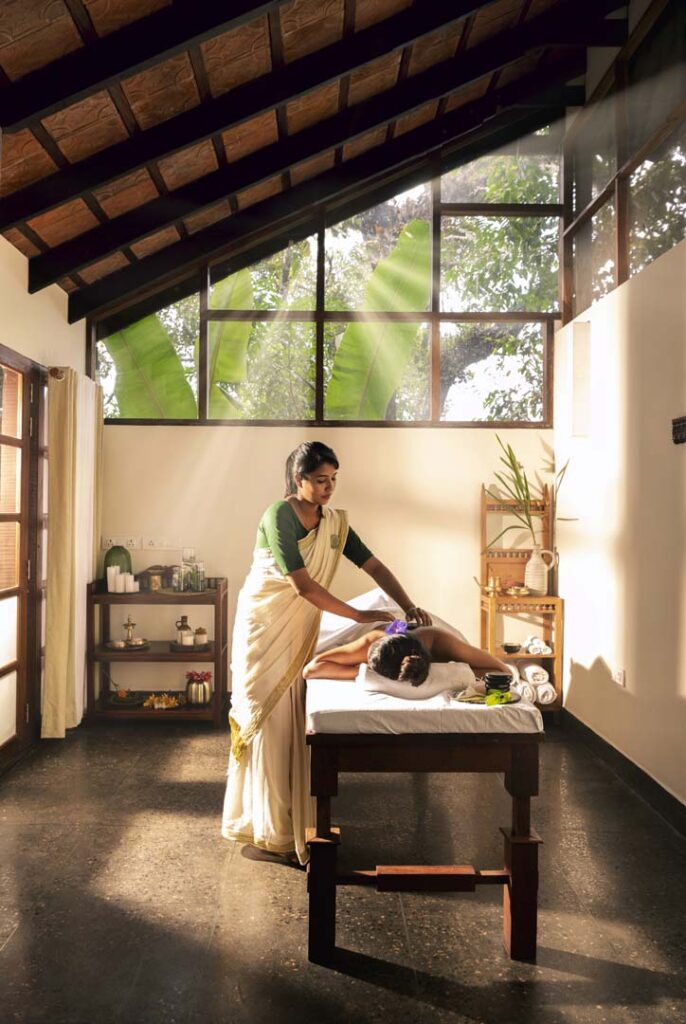
Abhyanga is a full body massage using warm herbal oils. It is steady, methodical, and surprisingly grounding. In many places, two therapists work in sync, which gives the treatment a kind of rhythm that is hard to describe but easy to feel.
At first, the amount of oil might catch you off guard. Then your body settles into it.
Why it works:
- It improves circulation without being aggressive
- It helps with travel fatigue, which most people underestimate
- It prepares your body for deeper treatments if you plan to try more
It is simple, yes, but it is also the base layer of many Ayurvedic programs.
Shirodhara, when your mind refuses to slow down
This one is often recommended for people who arrive with a full head.
Shirodhara involves a steady stream of warm oil poured across the forehead. That description sounds unusual, but the experience is very controlled and calm. You lie still while the oil flows in a consistent pattern.
Something interesting happens after a few minutes. Your thoughts do not disappear, but they lose their edge.
People who benefit most:
- Anyone dealing with mental fatigue
- Light sleepers
- Travelers who have been hopping between cities
It is not dramatic. It is quiet. And that is exactly why it works.
Njavara Kizhi, a treatment that feels more physical
If Abhyanga is smooth, Njavara Kizhi has more texture.
Small bundles filled with medicated rice are dipped in warm herbal mixtures and pressed against the body. The heat and weight create a steady, comforting pressure.
This is often recommended for:
- Joint stiffness
- Muscle soreness after long travel days
- People who prefer something more tangible than oil massage alone
There is a certain grounded feeling to it. It is less about drifting off and more about feeling your body again.
Udvartana, not relaxing but useful
Not every treatment is meant to relax you.
Udvartana uses herbal powders instead of oil. The strokes are firmer, faster, and designed to stimulate rather than calm. It is often described as a dry massage, but that does not fully capture it.
It is particularly useful for:
- Improving circulation
- Exfoliating the skin
- Supporting metabolism
Some people love it. Others prefer the gentler treatments. It depends on what you need at that moment.
Panchakarma, when you want something deeper
This is where things shift from spa to structured therapy.
Panchakarma is a multi day program focused on cleansing the body. It involves a combination of treatments, diet adjustments, and guided routines. It is not something you casually try for an afternoon.
It requires time, and more importantly, commitment.
If you are staying longer in Kerala, it might be worth considering a dedicated wellness property where these programs are taken seriously. For example, Spicetree Rajakumari offers structured wellness stays that go beyond individual treatments. Their programs combine therapies with yoga, diet, and rest in a way that feels cohesive rather than pieced together.
That said, not everyone needs Panchakarma. A few well chosen treatments can be just as meaningful if your trip is short.
Choosing without overcomplicating it
It is easy to overthink this part. You read about doshas, detox plans, and suddenly it feels like a decision that requires research.
It does not.
Start with how you feel right now:
- Tired and heavy after travel? Try Abhyanga
- Mentally drained? Go for Shirodhara
- Physically stiff? Njavara Kizhi is a safe choice
- Want something active? Udvartana
If you are staying more than a few days, speak to a practitioner. A short consultation can save you from choosing randomly.
A few practical notes people rarely mention
You will use more oil than you expect. Clothes might get stained, so pack accordingly.
Treatments are slower than typical spa sessions. That is intentional. Rushing would defeat the purpose.
You might feel slightly tired afterward. This is normal, especially after oil based therapies.
And sometimes, the benefits show up later. Not immediately.
So, is it worth your time
Yes, but not for the reasons most brochures suggest.
Ayurveda is not about instant results. It is about small adjustments that build over time. A better night of sleep. A quieter mind. Less tension in your shoulders that you did not even notice before.
It is subtle, and that subtlety is what stays with you.
You may come in expecting a massage. You leave with something quieter, harder to define, but definitely noticeable.
And that is usually enough.